
Table of Contents
- Why Interactive Culinary Team Building Delivers Real Results
- How Culinary Team Building Strengthens Workplace Relationships
- Boosting Team Morale and Job Satisfaction Through Hands-On Experience
- Enhancing Communication Skills and Problem-Solving Abilities
- Scaling Interactive Workshops for 100 Guests Without Losing Impact
- Planning Corporate Cooking Class Duration and Activity Structure
- Culinary Team Building Activity Ideas for Different Group Dynamics
- Measuring Long-Term Impact and ROI of Your Culinary Event
- Frequently Asked Questions
Last Updated: September 1, 2026
Why Interactive Culinary Team Building Delivers Real Results
Interactive culinary team building strengthens workplace dynamics because teams solve problems in real time, communicate under mild pressure, and celebrate shared achievement. When groups cook together, they’re not just preparing food, they’re developing the collaboration skills that matter most professionally.
At International Chocolate Events, we’ve seen firsthand how hands-on culinary experiences transform team cohesion. Groups arrive with varying engagement levels; they leave as a unified workforce. The reason is simple: culinary activities demand active participation. Everyone has a role, everyone contributes, and everyone sees tangible results within hours.
The core appeal lies in creating something together, whether chocolate truffles, a multi-course meal, or artisanal confections. This hands-on approach generates genuine interaction, not forced networking. People work alongside colleagues they might not normally connect with, breaking down silos and building authentic relationships through shared effort.
The key differentiator between effective culinary team building and generic workshops is accountability. When your team creates a physical product together, there’s ownership. That ownership translates into engagement and memory retention that lasts months after the event.
Interactive culinary team building mirrors real workplace challenges. Teams must coordinate timing, manage resources, adapt to setbacks, and communicate clearly, the exact skills that matter most professionally. Participants develop these competencies while having genuinely enjoyable experiences, which means the learning sticks.
How Culinary Team Building Strengthens Workplace Relationships
Workplace relationships form the foundation of effective teams, and culinary activities create the conditions for those relationships to deepen naturally. When colleagues work side by side in a kitchen environment, social barriers lower. The structured yet relaxed nature of cooking together removes the awkwardness that often accompanies traditional team-building exercises.
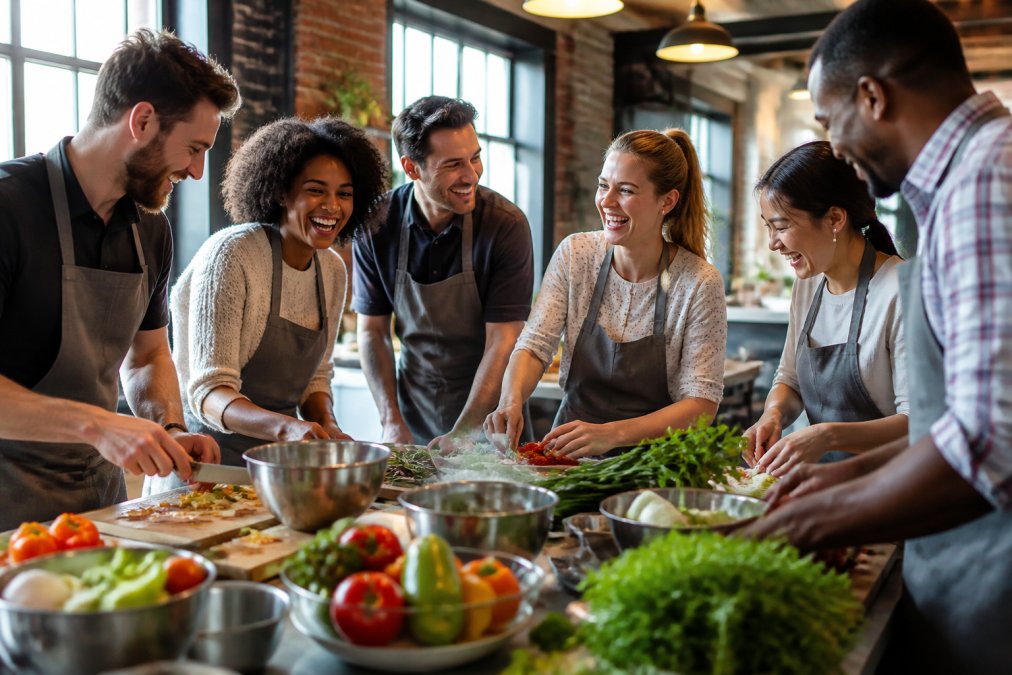
The collaborative problem-solving inherent in culinary experiences builds trust. When someone struggles with a technique, teammates naturally offer help. When a step goes wrong, the group troubleshoots together rather than assigning blame. These interactions, helping, supporting, recovering together, strengthen workplace relationships. Colleagues who’ve worked through challenges together in a culinary setting carry that collaborative spirit back to their regular roles.
Different personality types thrive in culinary environments. Quiet team members often shine when given specific tasks like plating or garnishing. Natural leaders coordinate timing and delegate responsibilities. Creative thinkers experiment with flavour combinations or presentation. This diversity of contribution means everyone finds a way to contribute meaningfully, boosting confidence and mutual respect across the team.
The informal setting also matters. People talk differently in a kitchen than in a conference room. Conversations flow naturally. Colleagues learn about each other’s lives, interests, and perspectives outside their job titles. These personal connections transform how people interact professionally.
The strongest workplace relationships develop through shared challenge and shared success. Culinary team building delivers both in a single event.
Boosting Team Morale and Job Satisfaction Through Hands-On Experience
Team morale often suffers when employees feel disconnected from leadership, from each other, or from their work itself. Interactive culinary team building addresses all three by creating an experience that feels genuinely special rather than obligatory.
Hands-on experiences boost morale because they signal that the organisation values employees enough to invest in memorable experiences. A curated culinary workshop communicates that the company cares about team well-being and wants to create moments people will actually enjoy.
Job satisfaction rises when employees feel they belong to a cohesive group. There’s something deeply satisfying about creating something tangible with colleagues and then sharing it together. That sense of collective accomplishment carries emotional weight. Participants return to their desks with renewed energy and a stronger sense of connection to their team.
Teams that participate in interactive culinary experiences tend to communicate more openly in subsequent weeks (apa.org). They’re more likely to volunteer help to colleagues and engage more actively in meetings. These behavioural shifts reflect genuine improvements in morale.
Generic team-building events often backfire when they feel forced or disconnected from genuine team challenges. Culinary workshops avoid this trap because the activity itself is inherently engaging, people aren’t pretending to have fun, they’re actually enjoying themselves.
Enhancing Communication Skills and Problem-Solving Abilities
Communication breakdowns cost organisations time and money. Interactive culinary team building directly addresses this by creating natural communication challenges that require immediate resolution.
In a kitchen environment, clear communication becomes essential. One person needs to know when another is ready for the next step. Teams must discuss timing, coordinate handoffs, and adapt when something doesn’t go as planned. These aren’t artificial scenarios, they’re real problems that emerge during the activity. Solving them builds communication competency in ways that training sessions rarely achieve.
Problem-solving abilities improve because culinary activities present genuine obstacles. A chocolate tempering technique isn’t working. A sauce is too thick. The plating station is becoming congested. Teams must think creatively, ask for advice, and test solutions. This mirrors workplace problem-solving but in a lower-stakes environment where experimentation is encouraged.
The communication skills developed during culinary workshops transfer directly to workplace scenarios. Teams learn to articulate problems clearly, listen actively to colleagues’ suggestions, and build on ideas together, the exact skills that improve project outcomes and reduce conflict.
Scaling Interactive Workshops for 100 Guests Without Losing Impact
One of the most common concerns from corporate organisers is whether interactive culinary team building can actually scale to large groups without becoming impersonal or chaotic. The answer is yes, but only with proper planning and structure.
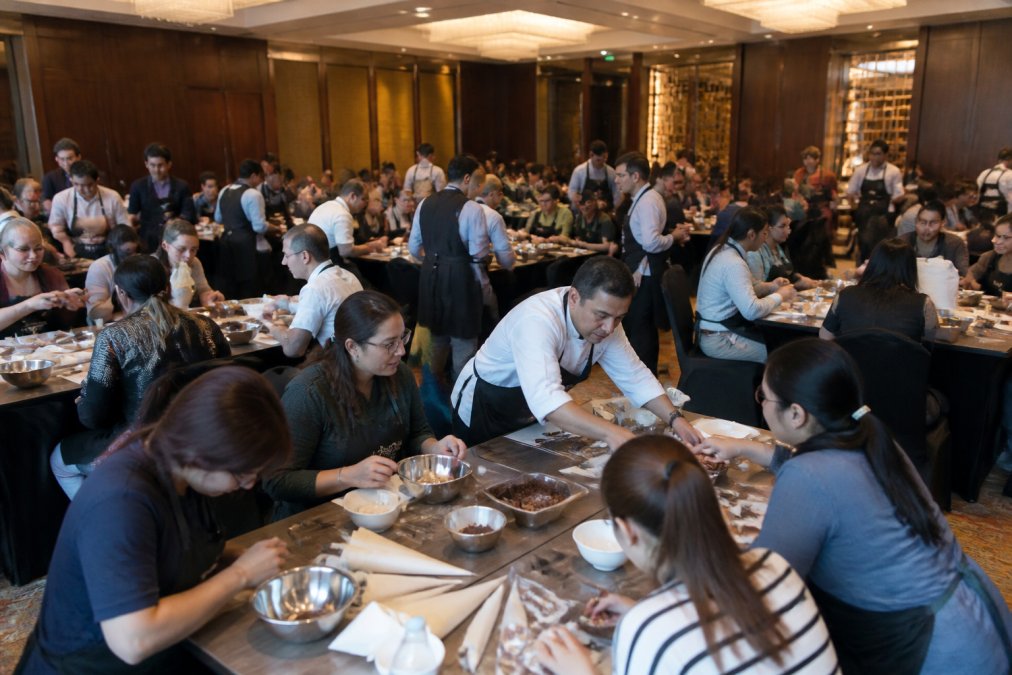
The key to scaling interactive workshops for 100 guests is dividing participants into smaller working groups, typically 8-12 people per station (shrm.org). This maintains the intimate, collaborative feel while accommodating larger numbers. Each group has dedicated facilitators who ensure everyone participates actively.
Station-based formats work particularly well for large groups. Different stations might focus on different culinary skills or components. Participants rotate through stations or work in parallel groups, which keeps energy high and prevents bottlenecks. This approach also allows for customisation, different stations can accommodate dietary requirements, skill levels, or specific team objectives.
Timing becomes critical at scale. A well-structured 100-person culinary workshop typically runs 2-3 hours, with clear phases: introduction and safety briefing, hands-on preparation, collaborative cooking or assembly, and a shared tasting or celebration. Building in buffer time between phases prevents the event from feeling rushed. International Chocolate Events specialises in orchestrating these larger experiences while maintaining the interactive, engaging atmosphere that makes culinary team building effective.
Adequate workspace, sufficient equipment at each station, and well-trained facilitators are non-negotiable. When these elements are in place, groups of 100 benefit from the scale, there’s more energy, more diverse perspectives, and a stronger sense of collective achievement.
Planning Corporate Cooking Class Duration and Activity Structure
The optimal structure for a corporate cooking class depends on your team’s size, available time, and specific objectives. Most successful culinary team-building experiences fall into distinct formats.
A 90-minute workshop is the sweet spot for many corporate settings (shrm.org). This duration provides enough time for meaningful participation without requiring participants to be away from their desks all day. The structure typically includes a 10-minute introduction, 60-70 minutes of hands-on work, and 10-15 minutes for tasting or celebration.
For longer off-site events, a 3-hour format allows for more complexity and deeper engagement. Participants can tackle more ambitious culinary challenges, and facilitators have time to develop stronger connections with each group.
Half-day workshops (4-5 hours) work well for smaller groups or when you want to combine culinary team building with other activities. These sessions can include multiple culinary components, more extensive instruction, and substantial time for team reflection.
The activity structure should balance instruction with autonomy. Too much direction and participants feel like they’re following orders. Too little guidance and groups become frustrated. The ideal is providing clear parameters and objectives while allowing teams to make decisions about execution.
Corporate teams of 20-60 people planning a half-day off-site benefit most from a 2-3 hour culinary workshop. Larger groups (60-100+) should plan for 2.5-3 hours to accommodate station rotation and prevent congestion.
Culinary Team Building Activity Ideas for Different Group Dynamics
Not all teams have identical needs, and culinary team building can be tailored to address specific group dynamics and objectives.
For newly formed teams, chocolate-making workshops work exceptionally well. The activity requires immediate collaboration on a shared product. By the end, the team has created something tangible together, which builds initial trust and rapport.
For high-pressure teams dealing with stress or burnout, culinary experiences focused on creativity and experimentation are ideal. Rather than rigid recipes, teams might work with a palette of ingredients and create their own flavour combinations. This encourages play and reduces performance pressure.
For remote or hybrid teams that rarely meet in person, culinary workshops create face-to-face relationships and shared memories. For hybrid teams, the event signals that the organisation values in-person connection.
For cross-functional teams where departments rarely interact, culinary activities break down silos naturally. A marketing person, an engineer, and a finance professional working together removes the artificial barriers that job titles create.
For leadership teams focused on strategic alignment, culinary workshops can be structured around decision-making and delegation. Teams assign roles, coordinate timing, and manage resources, exactly like running a business.
International Chocolate Events tailors experiences to these different dynamics, ensuring that the culinary activity directly addresses your team’s specific challenges and objectives.
Measuring Long-Term Impact and ROI of Your Culinary Event
Corporate investments in team-building activities face increasing scrutiny around return on investment. The challenge is that the most meaningful benefits, improved communication, stronger relationships, better morale, are harder to quantify than the event cost. Yet they’re measurable if you know what to track.
The most straightforward measures are behavioural. In the weeks following a culinary team-building event, track participation in voluntary collaboration. Are people volunteering to work together on projects more frequently? Are cross-team interactions increasing?
Monitor absenteeism and turnover rates for your team in the months following the event. Teams with stronger cohesion and higher morale typically show reduced absence and lower turnover. A notable improvement suggests the culinary experience contributed to retention.
Qualitative feedback matters as much as quantitative data. Survey participants weeks after the event. Ask specific questions: “Did this event change how you interact with colleagues?” “Have you worked more closely with someone you met during the workshop?” Responses reveal whether the experience created lasting impact.
Project outcomes provide another measurement point. Teams that participated in culinary team-building often show improvements in project delivery timelines, decision-making speed, and cross-functional collaboration on subsequent initiatives.
The most meaningful ROI from interactive culinary team building isn’t captured in a spreadsheet, it’s visible in how your team works together months after the event. Stronger relationships, clearer communication, and higher morale create compound benefits that extend far beyond the event itself.
Interactive culinary team building represents one of the most effective investments in your team’s cohesion and capability. Rather than passive exercises that people endure, culinary workshops create genuine engagement where participants actively contribute to something meaningful. International Chocolate Events brings expertise in designing and delivering these experiences at scale, with bespoke workshops tailored to your team’s specific dynamics and objectives. Whether you’re building relationships across a newly formed team, strengthening communication in a high-pressure environment, or creating memorable experiences for 100+ employees, culinary team building delivers measurable results. Make an enquiry with International Chocolate Events to discuss how a customised culinary workshop can transform your team’s collaboration and culture.
Frequently Asked Questions
What are the main benefits of interactive culinary team building for corporate groups?
Interactive culinary team building creates multiple benefits simultaneously. Hands-on cooking fosters genuine collaboration, as team members work toward a shared goal. The experience reduces stress through creative engagement and builds workplace relationships in a relaxed, social setting. Participants develop communication skills, problem-solving abilities, and creative thinking while enjoying a tangible outcome they can share. The informal environment encourages colleagues from different departments to interact naturally, strengthening team dynamics and workplace culture.
Can scaling interactive workshops for 100 guests maintain quality and personal engagement?
Yes, when structured properly. The key is dividing larger groups into smaller cooking stations with dedicated facilitators at each, ensuring every participant remains actively involved rather than observing passively. Multiple stations allow simultaneous activities, preventing bottlenecks. Professional facilitators manage timing and group dynamics, maintaining the interactive experience even at scale. This approach preserves the hands-on, collaborative atmosphere that makes culinary team building effective, regardless of total group size.
How long should a corporate cooking class duration be to balance engagement and productivity?
A well-designed corporate cooking class typically runs 90 minutes to 2 hours. This timeframe allows sufficient time for introductions, skill instruction, hands-on cooking, and enjoying the finished product together without causing fatigue or excessive time away from work. Shorter sessions risk feeling rushed; longer sessions may lose engagement. The optimal duration depends on group size, complexity of the culinary activity, and whether the event includes a seated meal or informal tasting at the end.
What culinary team building activity ideas work best for diverse corporate groups?
Effective culinary team building activity ideas include collaborative chocolate-making workshops, where small teams create their own confections; group cooking challenges with friendly competition; or guided tasting experiences paired with discussion. Activities work best when they require genuine teamwork, mixing, decorating, or plating together, rather than individual tasks. Choose activities that allow participants to customize their creations, accommodate dietary requirements, and create a tangible takeaway. The most successful activities balance skill-building, creativity, and social interaction.