
Last Updated: November 4, 2026
Quick Summary
To transport chocolate equipment for mobile events, keep machines clean, dry and steady, and control temperature and humidity throughout. Pack tempering machines in padded fitted cases, strap everything down against vehicle vibration, and let machines acclimatise before switching on at the venue.
- Temperature matters more than weight, so plan cool-box or insulated transport for chocolate.
- Humidity can cause sugar bloom and affect the finish of the final product.
- Pack machines in padded, fitted cases and strap every item to the floor or a rack.
- Let a portable tempering machine acclimatise for 30 minutes before switching it on.
- Allow a 60 to 90 minute setup window for larger machines at the venue.
Table of Contents
- Food Safety Regulations for Mobile Catering You Need to Meet
- Step 1: Plan Temperature and Humidity Control Before You Pack
- Step 2: Pack and Secure the Equipment for Vehicle Vibration
- Step 3: Transport a Portable Chocolate Tempering Machine Safely
- Step 4: Set Up Power, Sanitation and Load-In at the Venue
- Corporate Workshop Equipment Checklist for Load-In and Load-Out
- Planning Your Next Corporate Chocolate Workshop With International Chocolate Events
- Frequently Asked Questions
Moving chocolate equipment is not like moving tables, chairs or sound systems. Chocolate is sensitive to heat, humidity and sudden movement, and a bumpy drive can ruin a batch before the first guest arrives.
Transporting chocolate equipment for mobile events means moving machines that heat, cool and hold chocolate at exact temperatures. For the wider logistics context behind mobile chocolate workshops, read our logistics of mobile chocolate making workshops. A tempering machine, melting tanks and moulds all need to stay clean, dry and steady during transit.
Most event kit can be packed in any order and set down anywhere. Chocolate equipment cannot. Here is what sets it apart:
- Temperature matters more than weight. Chocolate must stay within a narrow working range, so a cold van or hot car park can undo hours of setup.
- Humidity is a hidden risk. Moisture can cause sugar bloom and affect the finish of the final product.
- Vibration can damage calibration. Heating elements and sensors can shift out of position on rough roads.
- Cleanliness is non-negotiable. Residual cocoa butter and moisture attract contamination if kit is stored carelessly.
Food Safety Regulations for Mobile Catering You Need to Meet
Food safety law applies to mobile chocolate workshops exactly as it does to a fixed kitchen, and environmental health officers increasingly inspect event caterers on site. The framework is set by the Food Safety Act 1990, with detailed hygiene requirements in the Food Hygiene (England) Regulations 2013 and equivalent regulations in Scotland, Wales and Northern Ireland. The Food Standards Agency (FSA) publishes guidance for mobile and temporary food businesses at Food Standards Agency guidance for mobile food businesses.
Before your first event, check with your local authority environmental health department about registration requirements for food businesses, and allow time for the process before trading.
A documented food safety management system is an important part of running a mobile food business. Written procedures for a mobile chocolate setup should cover:
- Temperature control for chocolate, fillings and any dairy or cream ingredients, with probe readings logged at load-out, on arrival and before service.
- Cleaning and disinfection of bowls, moulds, scrapers and work surfaces before and after every event, using food-safe sanitiser at the correct contact time.
- Allergen management, including segregated storage for nuts, milk and soya, and a written allergen matrix you can produce on request.
- Personal hygiene, with hand-washing facilities or an alcohol-based hand rub where running water is not available, plus clean aprons and disposable gloves.
- Waste handling, with sealed bins for packaging and rejected product kept away from the prep zone.
Watch out: a common failure at temporary venues is having no written record of fridge or cool-box temperatures. Carry a simple log sheet and complete it in front of the organiser if challenged.
Transport itself is part of the food safety chain. Keep chocolate and ingredients in food-grade, lidded containers, separate raw ingredients from finished product, and never store equipment and food in the same case. Insulated boxes should be pre-chilled where the product requires it, and you should carry a calibrated probe thermometer to verify temperatures on arrival.
Staff training matters too. Staff handling food should have appropriate food hygiene training, and a nominated supervisor should be responsible for food safety records at each event. Keep certificates and your written procedures in a folder in the van so they are available for inspection.
Finally, check the venue’s own requirements. Many hotels, conference centres and marquees ask for a copy of your food hygiene rating, public liability insurance and risk assessment before load-in. Having these ready as a single PDF saves time at the loading bay.
Step 1: Plan Temperature and Humidity Control Before You Pack
Start with the venue conditions, not the van. Ask the organiser about the room temperature, whether there is air conditioning, and how long the equipment will sit before use. A marquee in summer and a hall in winter may need different plans.
- Check the venue forecast for the event day and the day before.
- Plan a cool-box or insulated case for chocolate that must stay below a set temperature in transit.
- Bring a digital thermometer and hygrometer so you can check conditions on arrival.
- Schedule a warm-up time so machines reach working temperature before guests arrive.
Many event teams find that a 60 to 90 minute setup window works well for larger machines. Build in extra time if the venue is cold or the journey is long.
Step 2: Pack and Secure the Equipment for Vehicle Vibration
Vehicle vibration is one of the biggest threats to mobile chocolate kit. Potholes, motorway joints and sudden braking can knock sensitive parts out of line.
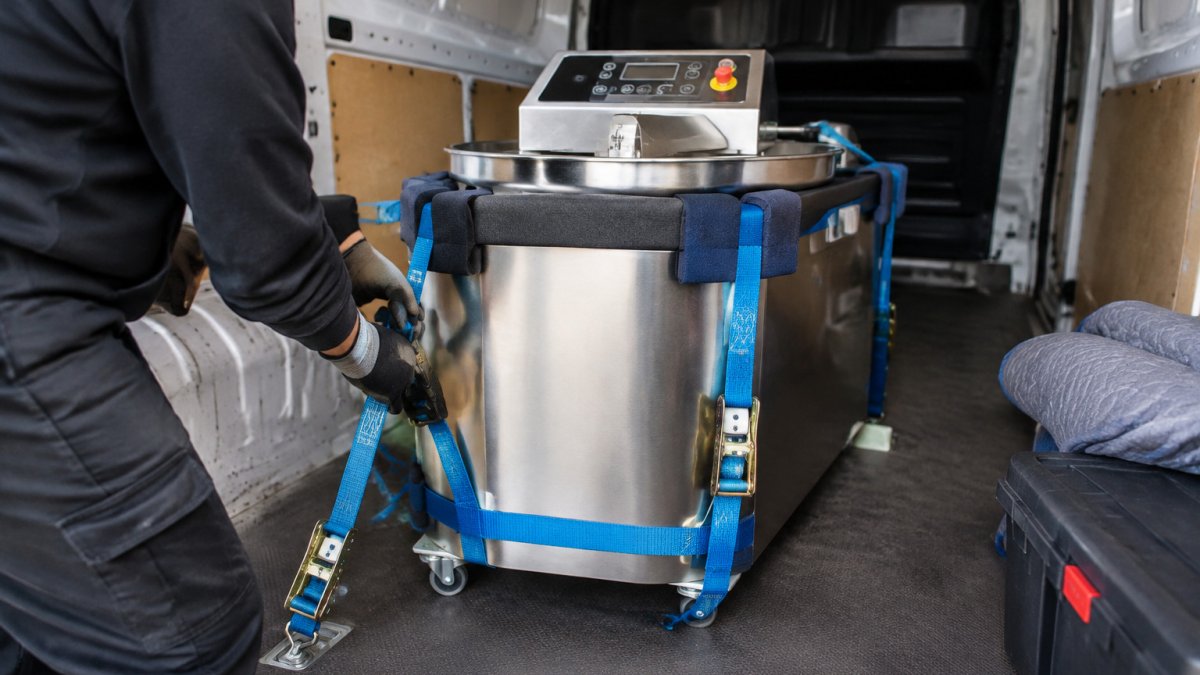
- Use padded, fitted cases for the tempering machine and any digital controls.
- Strap every item to the floor or a sturdy rack so nothing slides.
- Pack heavy items low and keep the centre of gravity stable.
- Keep moulds and trays flat and separated with clean protective sheets.
- Leave room for airflow so heat from machines does not build up in closed compartments.
Gloved hands strapping a tempering machine into a clean van cargo area is a good picture of the process. Double-check every strap before you drive off.
Step 3: Transport a Portable Chocolate Tempering Machine Safely
A portable chocolate tempering machine is the heart of most mobile workshops, so handle it with extra care.
- Empty and clean the bowl before moving the machine.
- Lock any moving parts and remove loose accessories.
- Lift with two people and keep the machine upright at all times.
- Cover the unit with a clean sheet to keep dust and moisture out.
- Let it acclimatise for 30 minutes before switching on at the venue.
Acclimatising matters. A machine that goes from a cold van straight to a warm room can form condensation inside, which affects both safety and performance.
Step 4: Set Up Power, Sanitation and Load-In at the Venue
Power is the most common failure point at mobile events, and it deserves planning before you leave the depot. A portable tempering machine typically draws between 1.5 kW and 3 kW, and melting tanks add further load. Add up the wattage of every appliance you plan to run at once, then divide by 230 volts to get the current in amps.
Ask the venue three questions in advance: what is the rating of the socket you can use, is it on a dedicated circuit, and is there a generator or distribution board available? For marquees and outdoor sites, a petrol or diesel generator rated at least 25% above your calculated load gives headroom for startup surges. Never daisy-chain extension leads, and use a residual current device (RCD) on every circuit, a 30 mA RCD is the standard protection against earth faults.
Cable management is part of the setup. Run leads along walls rather than across walkways, tape them down where they must cross a path, and keep them away from water points and guest traffic. Label each lead at both ends so you can trace a fault quickly.
Sanitation at a temporary venue needs its own plan. Set up a clean prep zone away from bins, drinks stations and general traffic, lay down food-grade surfaces, and wipe them with food-safe sanitiser before use. Carry a sanitation kit with colour-coded cloths, sanitiser, disposable gloves and hand-wash supplies.
Load-in should follow a written route. Confirm the loading bay, lift dimensions and door widths with the organiser beforehand, because a tempering machine on a trolley will not fit through a standard 800 mm doorway if it is still boxed. Move equipment in the order it will be needed: power and cables first, then machines, then ingredients and moulds. Keep a clear path so you are not crossing the guest area with heavy items.
Watch out: venues often switch off power to function rooms between setup and the event start. Confirm the socket will remain live, or plan to bring the machines up to temperature close to service time rather than hours in advance.
The article gives these power and setup figures for a mobile chocolate workshop:
| Item | Value | Note |
|---|---|---|
| Portable tempering machine draw | 1.5 kW to 3 kW | Typical range for the machine |
| Domestic socket capacity | Around 3 kW | Per 13-amp socket |
| Generator headroom | At least 25% above load | Allows for startup surges |
| Residual current device | 30 mA | Standard earth fault protection |
| Supply voltage used for amps | 230 volts | Divide wattage by 230 for amps |
| Setup window | 60 to 90 minutes | For larger machines |
Corporate Workshop Equipment Checklist for Load-In and Load-Out
Use this checklist for every corporate workshop. Tick each item before you leave the venue or the depot.
- Tempering machine, power lead and spare fuse or cable
- Melting tanks, bowls and scrapers, all clean and dry
- Moulds and trays, wrapped and labelled
- Digital thermometer and hygrometer
- Insulated cool-box for chocolate and ingredients
- Sanitiser, cloths, disposable gloves and hand-wash supplies
- Protective sheets and fitted cases for every machine
- Extension lead with RCD protection, rated for the load
- Packing list with a photo record of how each item was packed
- Post-event check for damage, moisture and cleaning
Work through the list twice: once at load-in and again at load-out. Note any missing or damaged items so you can fix them before the next event.
Planning Your Next Corporate Chocolate Workshop With International Chocolate Events
Planning a chocolate workshop for a team, client group or social event is much easier when the logistics are handled by people who do this every week. At International Chocolate Events, we bring the equipment, the expertise and the planning, so your team can focus on enjoying the experience.
Whether your group is 15 people or over 100, we can tailor the workshop to your venue, timing and dietary needs. Every event is different, so pricing depends on group size, date, location and delivery requirements. For current pricing or a bespoke quote, make an enquiry with the team and tell us about your event.
If you are planning a larger programme or an event outside the UK, our global events cover destinations worldwide. For guidance on the wider planning steps before you book, read our corporate events planning guide for large groups. If you want to see the hands-on experience our equipment supports, take a look at our chocolate making experience.
Get in touch with International Chocolate Events and we will help you plan a workshop that runs smoothly from load-in to load-out.
Frequently Asked Questions
What are the food safety requirements for transporting chocolate equipment?
Chocolate equipment that touches food should be food-grade and kept clean between uses. Food businesses in the UK must follow food hygiene rules, and the Food Standards Agency publishes guidance on them. Keep wet and dry equipment separated in transit, cover contact surfaces, and carry a cleaning kit so you can sanitise on arrival. Check with the local authority if you are serving food at the venue, as temporary event food businesses may need to register.
How do you maintain temperature control for chocolate during transit?
Chocolate is sensitive to heat and humidity, so plan the journey around temperature. Keep tempered chocolate out of direct sun and avoid leaving the vehicle in a hot car park where possible.
What insurance is required for mobile catering and workshop equipment?
Most mobile operators carry public liability insurance and product liability cover, and equipment is often covered by a contents or goods-in-transit policy. Check that your policy covers equipment while in a vehicle and at off-site venues. Ask the venue whether they require proof of cover before the event. Insurance terms vary, so speak to a UK insurance broker to confirm the right cover for your setup.
How do you pack delicate chocolate-making tools for travel?
Secure heavier items so they cannot slide, and keep cleaning products separate from food-contact equipment.
