
Table of Contents
- Why Managing Dietary Needs Matters for Your Workshop
- Step 1: Collecting Dietary Requirements for Events Early
- Step 2: Communicating Needs to Your Caterer or Venue
- Step 3: Managing Allergies and Cross-Contamination in Interactive Sessions
- Understanding Food Safety Regulations for Corporate Events
- Step 4: Creating an Inclusive Menu That Goes Beyond Allergies
- Step 5: Handling Last-Minute Requests and Emergencies
- Conclusion: Building a Sustainable Dietary Needs Strategy
- Frequently Asked Questions
Last Updated: September 4, 2026
Managing dietary needs in workshops is the process of identifying, communicating, and accommodating attendees’ food allergies, intolerances, and lifestyle choices throughout the event lifecycle. For HR managers and event coordinators, getting this right protects guest safety, ensures legal compliance, and directly influences how engaged participants feel. At International Chocolate Events, we have hosted hands-on workshops for groups from 10 to over 100 people, and we have learned that a strong dietary strategy is the difference between a memorable event and a logistical headache. Below, we’ll show you exactly how to build that strategy, covering the five steps we use to keep every guest safe, included, and well-fed.
Why Managing Dietary Needs Matters for Your Workshop
The stakes go far beyond menu preference. A workshop where attendees worry about whether the food is safe cannot hold their attention, and a single allergic reaction can derail an entire session and damage your organisation’s reputation. Dietary requirements in a corporate setting are not niche; they span common food allergies, intolerances like gluten and lactose, vegan and vegetarian diets, and religious considerations such as halal or kosher certification.
Getting this wrong is a genuine risk. Beyond the immediate health and safety concerns, there are legal obligations under UK food safety law that apply whenever you serve food in a professional context (food.gov.uk). A proactive approach protects your attendees and your organisation alike.
A well-managed dietary process is not just about the food on the plate. It is about attendee wellbeing, legal compliance, and ensuring your workshop content is the focus, not the catering.
Step 1: Collecting Dietary Requirements for Events Early
Collecting dietary requirements for events should begin at the moment of registration, not a week before the date. The earlier you ask, the more time your caterer has to source specific ingredients and the less pressure you face when accommodating complex requests. Build the questions into your booking form or send a dedicated follow-up email to every registered attendee, and set a firm deadline roughly two weeks before the workshop.
When you ask, be specific. A simple “any allergies?” box invites vague answers. Instead, list common allergens and ask attendees to tick all that apply, then provide a free-text field for details such as severity. Crucially, ask about intolerances and lifestyle diets separately from allergies, because the risk level and the kitchen procedures required are very different.
Using a Dietary Requirement Survey Template
A structured dietary requirement survey template removes guesswork and ensures you collect consistent data from every guest. Your template should request the attendee’s name, confirm their specific dietary requirements, classify the type (allergy, intolerance, or lifestyle choice), and capture the severity of any allergy, including whether it carries a risk of anaphylaxis.
You should also ask whether the requirement is a preference or a strict medical need, and leave space for attendees to note any ingredients they cannot come into contact with, not just consume. For interactive workshops where participants handle food, this distinction is critical. A guest with a severe nut allergy may need to avoid the room entirely if nuts are being used, whereas a vegan guest simply needs an alternative ingredient.
Step 2: Communicating Needs to Your Caterer or Venue
Once you have collected the data, communicating needs to your caterer or venue must happen in writing, and it must happen early. Send a consolidated, anonymised summary of all dietary requirements to your catering contact at least ten days before the event, and request written confirmation that they can meet each one. Avoid relying on verbal handovers, which are prone to error.
Your communication should include the total number of attendees, a breakdown of each dietary requirement, and a clear request for the caterer to confirm their process for preventing cross-contamination. Ask specifically how they label dishes, whether they prepare allergen-free meals in a separate area, and what their protocol is if an attendee asks about ingredients on the day. A caterer who cannot answer these questions clearly is a risk you should not take.
Step 3: Managing Allergies and Cross-Contamination in Interactive Sessions
Interactive workshops, where guests handle ingredients or taste samples, demand a higher level of vigilance than a seated meal. Managing allergies and cross-contamination in these settings means controlling the environment, not just the menu. If your activity involves common allergens such as nuts, gluten, or dairy, you must decide in advance whether to remove them entirely or create a fully segregated station for affected guests.
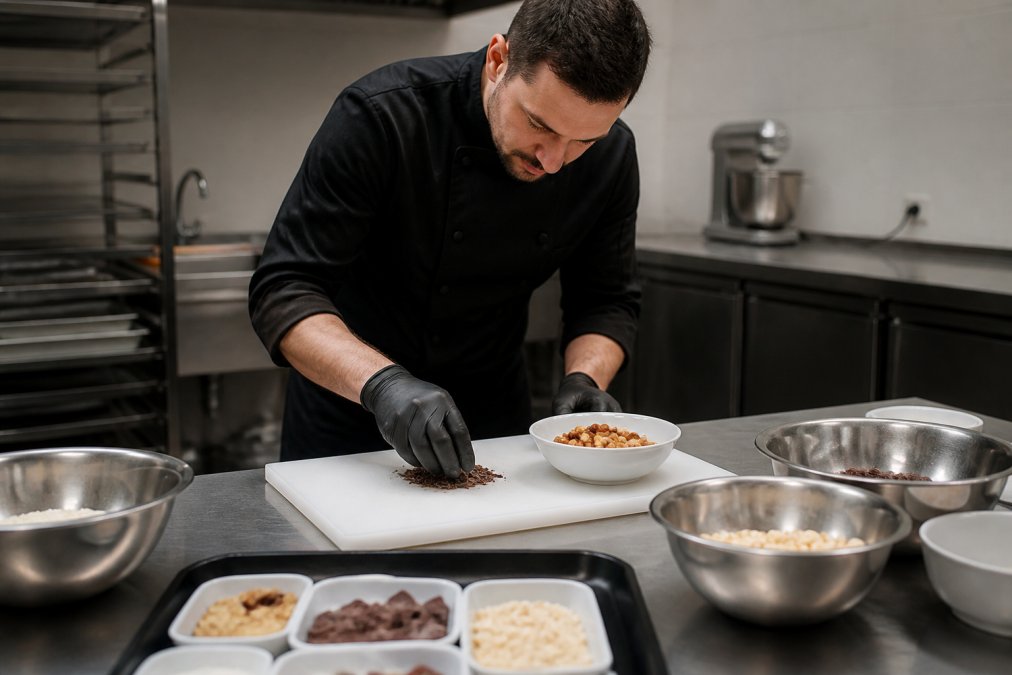
Cross-contamination happens through shared utensils, unwashed hands, and airborne particles. For a severe allergy, even trace contact can trigger a reaction. Establish clear rules: separate equipment for allergen-free batches, strict hand-washing between stations, and visible labelling on every ingredient container. Brief your workshop facilitators on the full list of requirements before guests arrive so they can guide participants away from unsafe choices.
In a hands-on workshop, cross-contamination is your biggest hidden risk. A guest with a severe allergy can react to traces on a shared work surface, not just the food they eat. Always prepare allergen-free portions first, in a separate area, before any allergenic ingredients are opened.
Understanding Food Safety Regulations for Corporate Events
UK food safety regulations for corporate events place legal responsibility on the business serving the food, which means your organisation, not just the caterer, carries liability. The Food Standards Agency sets out the core rules, and any caterer you use must be registered and operate under a food safety management system based on Hazard Analysis and Critical Control Point principles (food.gov.uk). You should verify this registration before you book.
Your due diligence does not stop at checking the caterer’s paperwork. You should confirm that they hold valid food hygiene certificates and that their staff are trained to handle allergen information accurately. Under UK food allergen labelling rules, businesses must provide allergen information for every dish they serve, and this obligation extends to corporate events and catering. Ask your caterer how they will label each item at your workshop and how they will handle an attendee who asks for allergen details on the day.
Step 4: Creating an Inclusive Menu That Goes Beyond Allergies
Creating an inclusive menu that goes beyond allergies means planning for a range of dietary lifestyles, not just eliminating the top allergens. A thoughtful menu naturally accommodates vegan, vegetarian, gluten-free, and dairy-free guests without making them feel like an afterthought. The goal is that every attendee has appealing, substantial options, not just a token salad.
Budgeting for Dietary Diversity
A major pain point for event organisers is the cost of catering for special diets. Gluten-free, vegan, and allergen-free ingredients are often more expensive, and caterers may charge a premium for separate preparation. To manage this, you need a clear budgeting strategy from the outset.
- Ask for a per-diet quote: When you brief your caterer, do not just ask for a single per-head price. Request a breakdown for each dietary category (e.g., standard, vegan, gluten-free). This gives you a clear picture of where the cost pressure is.
- Negotiate on volume: If you have a large group, use the volume of standard meals as leverage to negotiate a better rate on the special diet portions. Caterers are often willing to discount the standard menu to secure the contract.
- Consider a ‘build-your-own’ model: A buffet or a ‘bowl’ style setup, where attendees choose their own base, protein, and sauces, is often more cost-effective than plated meals. It reduces the need for separate, pre-plated special meals and naturally accommodates a wide range of diets.
- Set a realistic contingency: Allocate 5-10% of your total catering budget as a contingency for last-minute requests or unexpected dietary needs. This prevents a single request from blowing your budget.
Sourcing and Menu Design Strategies
When planning, consider nutritional balance and energy levels. Workshops demand concentration, so avoid heavy, sugar-laden catering that leads to an afternoon slump. Focus on providing protein-rich snacks, fresh fruit, and options that offer steady energy release. Portion control matters too; small, frequent breaks with light refreshments often work better for maintaining focus than one heavy meal.
A useful approach is to design a menu where the default options are inclusive, rather than building a standard menu and then creating separate “special” versions. For example, serve a curry with the protein and sauce separate from the rice, allowing guests to combine them as their diet permits. This reduces the burden on your caterer and makes every guest feel considered.
Navigating Cultural and Religious Diets
Beyond allergies and lifestyle choices, cultural and religious dietary requirements such as Halal and Kosher add another layer of complexity. These are not just preferences; they are deeply held beliefs. When you have attendees with these requirements, you must ensure your caterer is properly certified. Do not accept a verbal assurance. Ask to see the relevant certification (e.g., Halal Monitoring Committee or Kosher certification from the London Beth Din) and confirm that the certification covers the specific dishes they will be serving. A caterer who prepares Halal food in a kitchen that also handles pork without strict segregation is not compliant. This level of due diligence is essential for respecting your attendees’ faith and avoiding a serious breach of trust.
Step 5: Handling Last-Minute Requests and Emergencies
No matter how thorough your planning, you will encounter last-minute requests and the possibility of an allergic reaction. Handling these situations calmly requires a pre-agreed protocol that goes beyond a vague plan to ‘call 999’. Your team needs a rehearsed, role-specific response.
Building a Practical Emergency Response Plan
Before the workshop begins, confirm with your venue where the nearest first aid kit is located, and ensure at least one staff member on site knows how to recognise the symptoms of anaphylaxis and is trained to use an auto-injector. This is your designated ‘First Aider’. But a single point of contact is not enough. Assign specific roles to other team members so the response is not chaotic:
- The First Aider: Stays with the affected attendee, administers their auto-injector if they are unable to, and monitors their condition.
- The Caller: Immediately dials 999, clearly stating ‘suspected anaphylaxis’, and gives the venue’s exact address and postcode. They do not hang up until the operator instructs them to.
- The Guide: Goes to the main entrance or designated meeting point to flag down the ambulance crew and bring them directly to the attendee.
- The Crowd Manager: Keeps other attendees calm, clears the immediate area, and prevents people from crowding the affected person.
Do not rely on a single staff member to both administer first aid and call for an ambulance. In a real emergency, seconds matter. Assigning the call to a second person ensures the First Aider’s full attention is on the attendee.
Handling Last-Minute Dietary Changes
For last-minute dietary changes, keep a small reserve of safe, non-perishable snacks such as individually wrapped gluten-free bars or fruit that can cover an unexpected vegan or allergy requirement. If an attendee notifies you of a new allergy on the day, do not guess. Speak directly to your caterer or facilitator about what is safe, and if you cannot guarantee safety, be honest with the guest about the limitation. A common pattern is to offer to order a separate, verified-safe meal from a nearby restaurant if the venue cannot accommodate the request, rather than risking a reaction.
The Post-Incident Review
After any allergic reaction or near-miss, conduct a debrief with your team and the venue within 48 hours. Document what happened, what the response was, and what could be improved. This is not about blame; it is about refining your protocol. Update your emergency plan and your dietary requirements survey template based on what you learn. This continuous improvement loop is what separates a professional operation from an amateur one.
Always ask attendees with severe allergies whether they carry their own auto-injector and where they keep it. This simple question, asked during registration, means your team knows exactly what to do in the critical first minutes of a reaction. Also, ask them to confirm the name of the medication and its expiry date, so you are not relying on an out-of-date device in an emergency.
Conclusion: Building a Sustainable Dietary Needs Strategy
A sustainable dietary needs strategy is one you can repeat reliably at every workshop, regardless of size or location. It starts with structured data collection, flows through clear caterer communication, and depends on rigorous cross-contamination controls during the event itself. By codifying these steps into a checklist, you remove the stress of last-minute guesswork and build a reputation for events where every guest feels safe and valued.
This is exactly the approach we take at International Chocolate Events for our interactive chocolate-making workshops, which we tailor to accommodate nut allergies, vegan diets, and gluten-free requirements across groups of every size. Our master chocolatier designs each session so that every participant can fully take part, and our team handles the dietary logistics so you can focus on your people. If you are planning a workshop and want an experience that is as inclusive as it is indulgent, make an enquiry and let us show you how we manage dietary needs in practice.
Frequently Asked Questions
How do you collect dietary requirements for workshop attendees?
The most reliable method is to send a digital dietary requirement survey template as part of your RSVP confirmation, at least two weeks before the event. Ask specific questions about allergies and intolerances rather than a simple ‘any requirements?’. This gives you a clear list to share with your caterer. For corporate events, follow up directly with anyone who lists a severe allergy to confirm the details and reassure them about your safety protocols.
What are the legal responsibilities for catering to allergies in the workplace?
In the UK, you must follow food safety regulations for corporate events, primarily Natasha’s Law and the Food Information Regulations. Your caterer must provide full allergen information for every item served. Your responsibility is to ensure this information is accurately collected from attendees and passed on to the caterer. You must also take reasonable steps to prevent cross-contamination and have an emergency plan in place for severe allergic reactions, including knowing where the adrenaline auto-injectors are kept.
How can you ensure cross-contamination is avoided during interactive food workshops?
For hands-on sessions like chocolate making, the risk of cross-contamination is high. The safest approach is to use dedicated, colour-coded utensils and equipment for each dietary group. If you are managing food allergies yourself, prepare allergen-free portions first and cover them. For corporate events, it is often more practical to have a professional caterer or a specialist provider like International Chocolate Events handle the session, as they have strict protocols for separating ingredients and cleaning surfaces between groups.
How do you handle last-minute dietary requests at an event?
Start by keeping a small stock of pre-packaged, clearly labelled ‘free-from’ snacks, such as individually wrapped gluten-free or vegan treats, which can be a temporary solution. If the request is for a full meal, contact your caterer immediately to see what they can do. For interactive workshops, have a plan for isolating ingredients. Finally, never guess or assume a substitute is safe for a severe allergy; if you cannot verify it, apologise and explain that the attendee’s safety is your priority.