Table of Contents
- What to Expect from a Private Chocolate Making Workshop
- Mobile Chocolate Making Workshops for Corporate Events
- Corporate Team Building Chocolate Classes: What Sets Them Apart
- Bean-to-Bar vs. Truffle Making: Choosing Your Workshop Style
- Chocolate Workshop Group Booking Requirements and Logistics
- Dietary Requirements and Accessibility Considerations
- How to Choose the Right Private Workshop for Your Group
- Frequently Asked Questions
Last Updated: September 3, 2026
What to Expect from a Private Chocolate Making Workshop
A private chocolate making workshop is an immersive, hands-on culinary experience where participants learn the craft of chocolate tempering, ganache preparation, and truffle decoration under expert guidance. Unlike passive tasting sessions, these workshops put you at the centre of the creative process, measuring cacao, understanding cocoa butter crystallization, and crafting finished confectionery pieces you’ll take home.
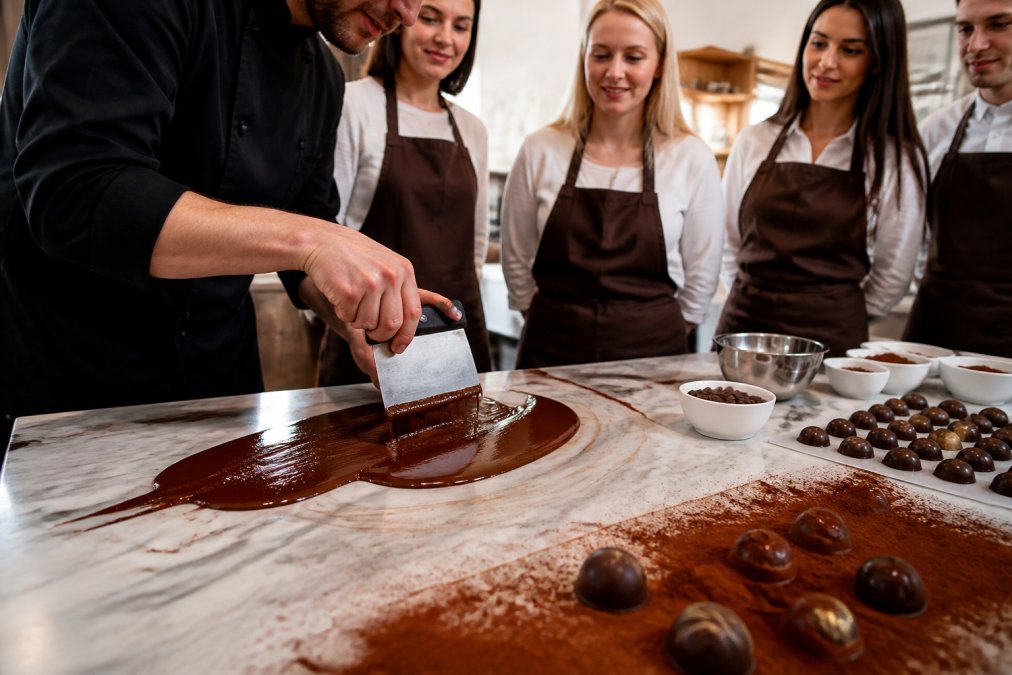
The typical private chocolate making workshop runs between two and four hours, depending on complexity and group size (peer-reviewed research). You’ll start with an introduction to chocolate types, tasting notes, and the science behind tempering, why cocoa butter behaves the way it does. Then comes the interactive element: you’ll move through stations learning techniques like hand-dipping, piping ganache, and decorating with precision. International Chocolate Events structures their private sessions to accommodate groups from 10 to 100+ people, scaling the experience without losing the artisan quality or personal attention.
What distinguishes a quality private workshop is the balance between instruction and autonomy. A master chocolatier should demonstrate each technique clearly, then step back and let you experiment. Common expectations include tasting different chocolate origins, understanding flavour profiles, and developing muscle memory for tempering. Most participants finish with a selection of their own hand-crafted pieces, typically six to twelve pralines or truffles depending on the workshop focus (peer-reviewed research).
The sensory experience matters as much as the technical skill. You’ll work with premium ingredients: quality couverture chocolate, real vanilla, fresh nuts, and natural flavourings. The environment should feel indulgent but professional, not a chaotic kitchen, but a dedicated space where chocolate work is taken seriously.
Mobile Chocolate Making Workshops for Corporate Events
Mobile chocolate making workshops bring the full artisan experience directly to your venue, eliminating logistical friction for corporate teams. Instead of coordinating transport and travel time, your group learns from a master chocolatier in your own conference space, hotel ballroom, or off-site location. This flexibility is why mobile workshops have become the preferred option for corporate team building.
The logistics of a mobile workshop centre on equipment portability and space requirements. International Chocolate Events travels with tempering machines, marble work surfaces, moulds, and all necessary ingredients, everything needed to deliver a complete truffle-making experience. Most mobile setups require a space roughly the size of a standard meeting room with access to water and electrical outlets. Setup typically takes 30 to 45 minutes before your group arrives.
For groups of 40 to 60 people, the mobile format works best when split into rotating sessions. While one group works with a chocolatier, others might participate in a tasting element or structured break. This approach keeps energy high and ensures everyone receives direct instruction without the workshop feeling rushed or impersonal. Groups larger than 60 often benefit from multiple chocolatiers or extended workshop time to maintain quality and engagement.
The cost efficiency of mobile workshops appeals to corporate planners. You avoid venue hire fees, travel expenses, and the coordination overhead of moving teams off-site. The experience becomes a standalone event rather than an add-on to a larger retreat, which often increases perceived value for participants.
One practical consideration: mobile workshops work best in venues with climate control. Chocolate is temperature-sensitive, and ambient heat affects tempering significantly. A well-air-conditioned space ensures consistent results and prevents frustration mid-session.
Corporate Team Building Chocolate Classes: What Sets Them Apart
Corporate team building chocolate classes differ fundamentally from recreational workshops in their design and objectives. While a social chocolate workshop focuses on individual skill development and indulgence, a corporate class emphasizes collaborative problem-solving, shared achievement, and memorable bonding.
Effective corporate chocolate classes incorporate elements that reinforce team dynamics. Pair-based tempering stations encourage communication and trust. Group challenges, such as creating a unified chocolate sculpture or competing in a blind tasting competition, build camaraderie. The best corporate facilitators weave these collaborative moments throughout the session rather than treating them as afterthoughts.
What makes the difference between a gimmick and a genuine team-building experience is intentionality. A poorly designed workshop feels transactional: show up, make chocolate, leave. A well-structured corporate class creates moments of genuine connection. When a colleague helps you master tempering technique, or when your team celebrates the first successful batch of ganache, those moments create lasting positive associations.
International Chocolate Events designs corporate sessions with debrief elements built in. After the hands-on portion, teams often reflect on what they learned about communication, patience, and shared goals. This reflection transforms a fun activity into a meaningful team experience that participants remember and reference weeks later.
The group size matters for corporate effectiveness. Workshops with 15 to 30 people allow enough interaction for genuine team bonding without becoming chaotic. Groups above 50 require careful facilitation to prevent individuals from feeling like spectators. The best corporate chocolate classes feel intimate even with larger groups because the facilitator maintains focus on participation rather than passive observation.
Bean-to-Bar vs. Truffle Making: Choosing Your Workshop Style
The choice between bean-to-bar and truffle-focused workshops shapes the entire experience and requires understanding what each teaches and delivers.
Bean-to-bar workshops trace chocolate from raw cacao pods through fermentation, roasting, grinding, and tempering to finished chocolate. These sessions are more technical and educational. You’ll learn why cacao origin matters, how conching develops flavour, and why tempering creates that distinctive chocolate snap. Bean-to-bar workshops typically run longer, three to four hours, because the process involves multiple stages and waiting periods. The learning curve is steeper, but the sense of accomplishment is proportionally greater. Participants leave understanding chocolate at a molecular level.
Truffle-making workshops focus on the artisan finishing stage. You’ll work with pre-made couverture chocolate, learning ganache preparation, tempering for dipping, and decoration techniques. These sessions are faster, typically 90 minutes to two hours, and more immediately rewarding. You’ll create 12 to 20 finished pieces that look and taste professional-quality. Truffle workshops appeal to groups seeking a quick, satisfying experience without deep technical immersion.
The practical difference for corporate groups is time and complexity. If your off-site runs tight on schedule, a truffle-making session fits more easily. If you want participants to discuss the experience afterwards and feel they’ve learned something substantial, bean-to-bar delivers more conversational depth. Many corporate planners choose truffle-focused experiences because they’re faster to execute and produce immediate, shareable results, everyone leaves with beautiful chocolates they made themselves.
A hybrid approach exists: some workshops begin with a brief bean-to-bar overview, then focus on hands-on truffle creation. This gives you the educational foundation plus the satisfaction of finished pieces without requiring four hours.
Chocolate Workshop Group Booking Requirements and Logistics
Group bookings for private chocolate making workshops involve specific logistical considerations that determine whether an experience runs smoothly or becomes stressful.
Minimum group size typically ranges from 10 to 15 people, depending on the provider. This threshold makes sense economically, a master chocolatier’s time and equipment setup costs the same whether you have 10 or 15 participants. Below that minimum, per-person costs become prohibitive. International Chocolate Events accommodates groups from 10 upwards, scaling seamlessly to 100 or more with multiple facilitators.
Advance notice matters significantly. Most providers require booking 4 to 8 weeks in advance for groups above 30 people. This lead time allows them to source premium ingredients, arrange staffing, and coordinate logistics. Last-minute bookings, within two weeks, are possible but often incur rush fees or limited availability.
Venue requirements are straightforward but non-negotiable. You need a space with tables suitable for chocolate work (smooth, washable surfaces), access to water, electrical outlets for tempering equipment, and climate control. A standard meeting room or hotel ballroom works perfectly. Outdoor spaces are problematic because temperature fluctuations affect chocolate tempering.
Catering coordination requires clarity. Most chocolate workshops don’t include meals, though some providers offer light refreshments. If your corporate event includes lunch or dinner alongside the workshop, confirm timing with your chocolatier, you don’t want participants eating heavy meals immediately before working with chocolate.
Dietary requirements must be communicated upfront. Nut allergies, vegan preferences, and gluten-free needs are manageable but require advance notice so ingredients can be sourced appropriately. A provider who doesn’t ask about dietary needs is cutting corners.
Payment and cancellation terms vary widely. Standard practice involves a deposit (often 25-50% of total cost) to secure the date, with final payment due 7 to 14 days before the event. Cancellation policies typically allow free cancellation up to 30 days in advance, with increasing penalties closer to the event date. Confirm these terms in writing before committing.
Group composition affects the experience subtly. Mixed-skill groups work well because chocolate-making has a low barrier to entry, everyone can succeed regardless of prior culinary experience. Age mixing is similarly unproblematic; children and adults often learn well together in this context.
Dietary Requirements and Accessibility Considerations
Dietary accommodations in chocolate workshops are more flexible than many corporate planners assume, but communication is essential.
Nut allergies are the primary concern in chocolate work. Many pralines and truffles traditionally use nuts for flavour and and texture. However, a skilled chocolatier can create entirely nut-free workshops by substituting with seeds, dried fruit, or alternative flavourings. The key is notifying your provider at least three weeks in advance so they can source appropriate ingredients and plan stations accordingly.
Vegan requirements are straightforward to accommodate. Most chocolate is naturally vegan (cacao, cocoa butter, sugar), though some traditional ganaches use cream or butter. Vegan alternatives like coconut cream or plant-based butter work effectively in hands-on workshops. Vegan participants can work alongside non-vegan groups without separate sessions.
Gluten-free needs rarely affect chocolate-making itself, since chocolate is inherently gluten-free. The only concern arises if the workshop includes biscuit bases or other accompaniments. Again, advance notice allows your provider to source gluten-free alternatives or eliminate those elements entirely.
Physical accessibility deserves explicit planning. Chocolate work typically happens at standing tables, which can be problematic for participants with mobility limitations. Request adjustable-height tables or seated workstations when booking. Tempering machines and moulding equipment should be positioned within easy reach. A thoughtful provider will ask about accessibility needs during the booking conversation; if they don’t, that’s a red flag about their attention to inclusive design.
Allergies beyond food, such as latex sensitivity, are less common but worth mentioning. Some chocolatiers use latex gloves; alternatives exist if you flag this concern early.
The principle underlying all these accommodations is simple: dietary and accessibility needs are solvable problems when communicated in advance. A provider who treats these as complications rather than standard planning questions isn’t the right fit for a corporate group.
How to Choose the Right Private Workshop for Your Group
Selecting a private chocolate making workshop requires evaluating several dimensions beyond price and location.
Expertise and credentials matter more than marketing claims. A master chocolatier should have demonstrable experience, and ideally formal training or certifications from recognized chocolate institutions. Ask for references from previous corporate groups. A provider who hesitates to share references is worth avoiding. International Chocolate Events, for example, positions expertise as central to their offering: a master chocolatier with over a decade of experience leading bespoke events.
Customization capability separates generic workshops from truly tailored experiences. Your group might need a specific focus, perhaps truffle-making for a marketing team, or a bean-to-bar deep dive for a product development group. A good provider asks detailed questions about your group’s interests, skill levels, and objectives. They should offer multiple workshop formats rather than a single standardized experience.
Group size handling reveals a lot about a provider’s professionalism. Ask how they structure workshops for your specific group size. For 40 people, do they use multiple facilitators? Do they rotate groups through stations? Do they adjust content based on group dynamics? Vague answers suggest they haven’t thought through logistics carefully.
Dietary and accessibility planning should be built into their standard intake process, not treated as special requests. A provider who asks about these needs proactively demonstrates they’ve designed inclusive experiences. If you have to request accommodations, they’re reacting rather than anticipating.
Testimonials and case studies from similar corporate groups carry weight. A provider who works regularly with HR teams and corporate retreats understands the dynamics differently than someone primarily serving social groups. Look for evidence they’ve delivered memorable experiences that actually strengthened team dynamics, not just provided a fun distraction.
Practical logistics matter daily. How do they handle setup and breakdown? What happens if someone arrives late? How do they manage the handover of finished chocolates? These operational details distinguish smooth experiences from chaotic ones. A professional provider has systems for these scenarios.
Post-workshop support is often overlooked but valuable. Some providers offer follow-up content, recipes, chocolate pairing guides, or photos from the event, that extend the experience beyond the day itself. This added value reinforces the investment and gives participants something tangible to remember the experience by.
International Chocolate Events stands out among private chocolate making workshop providers because they combine expert facilitation with genuine flexibility. Their master chocolatier brings over a decade of experience to bespoke events, and they scale seamlessly from intimate groups to 100+ participants without sacrificing the artisan quality that makes these workshops memorable. Whether you’re planning a corporate team-building event, a luxury social celebration, or a specialized culinary experience, their approach to customization, addressing dietary needs, accessibility requirements, and specific group objectives, transforms a good workshop into a genuinely tailored event. British Chocolate Association standards for artisan chocolate makers provide context for professional chocolate-making credentials. To explore options for your group, make an enquiry with International Chocolate Events and discuss your specific requirements, group size, and objectives.
Frequently Asked Questions
Q: What makes a private chocolate making workshop different from a public class?
A: Private chocolate making workshops are tailored exclusively for your group, whether corporate teams or social celebrations. You control the dates, times, and content focus, bean-to-bar, truffle making, or a bespoke blend. Expert-led instruction means personalised attention and the ability to adjust difficulty levels or themes to suit your group’s interests and skill levels.
Q: How does a mobile chocolate making workshop work for corporate team building?
A: Mobile chocolate making workshops bring a master chocolatier and all equipment directly to your venue, office, hotel, or off-site location. Your team learns hands-on techniques like tempering, ganache-making, and decorating in a single session. This eliminates travel logistics and creates an immersive, interactive experience that strengthens team bonds through collaborative, sensory engagement.
Q: What are typical chocolate workshop group booking requirements?
A: Most private workshops accommodate groups of 10 to 100+ people, though smaller intimate gatherings are possible. Minimum group sizes (often 10-15) help ensure cost efficiency. You’ll need to specify attendee count, preferred dates, dietary requirements, and skill level preferences. Venues should provide adequate workspace, tables, and seating. Contact providers directly for current availability and specific requirements for your group size.
Q: Can private chocolate workshops accommodate dietary restrictions?
A: Yes. Reputable providers offer customisable options for vegan, gluten-free, and nut-allergy requirements. Communicate all dietary needs when booking so the chocolatier can source appropriate ingredients and adapt the experience. Always confirm dietary accommodation possibilities during your initial enquiry to ensure all guests can participate fully.