
Table of Contents
- 1. Host a Chocolate Tasting Party Guide with Curated Flights
- 2. Create an Interactive Chocolate Making Workshop at Home
- 3. Design a Chocolate and Wine Pairing Tips Experience
- 4. Set Up an Elegant Chocolate Fondue Station
- 5. Build a Luxury Chocolate Dessert Board and Tablescape
- 6. Offer Gourmet Chocolate-Themed Dinner Menu Planning
- 7. Plan Dietary-Inclusive Luxury Chocolate Experiences
- Making Your Chocolate Party Memorable and Scalable
- Frequently Asked Questions
Last Updated: August 31, 2026
7 Luxury Chocolate Party Ideas for Adults at Home
A luxury chocolate party transforms passive eating into active participation, turning your home into an interactive culinary destination. At International Chocolate Events, we’ve spent over a decade designing bespoke chocolate experiences that guests remember long after the evening ends. The difference between a standard dessert spread and a luxury chocolate party isn’t just premium ingredients, it’s creating moments of discovery, craftsmanship, and genuine connection.
This guide covers seven proven luxury chocolate party ideas that work at home, from intimate gatherings of 10 to larger entertaining of 60+. Each scales, accommodates dietary requirements, and delivers the “I didn’t expect that” moments that make events truly memorable.
1. Host a Chocolate Tasting Party Guide with Curated Flights
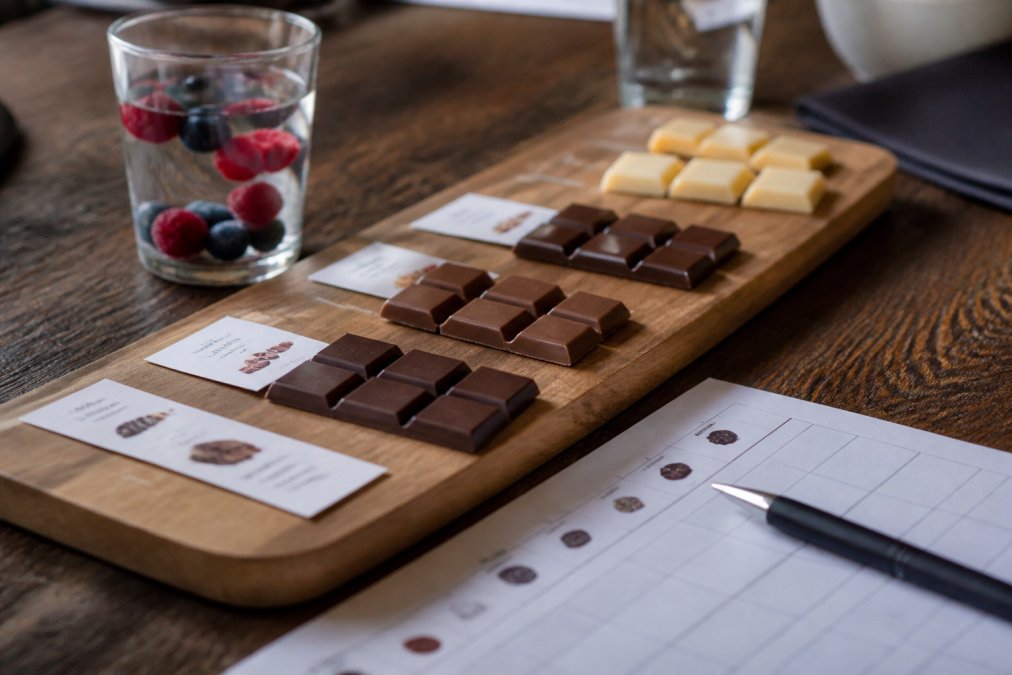
A structured chocolate tasting transforms casual nibbling into a sensory journey. A flight typically includes three to five chocolates arranged by cocoa percentage or flavour intensity: start with milk chocolate (35-45% cocoa), move through medium dark (55-65%), and finish with premium dark (70%+) (fao.org). This progression prevents palate fatigue and lets each chocolate’s nuances shine.
Setting up your tasting flight
Select artisanal chocolates from different origins or makers, a single-origin 72% from Ecuador tastes distinctly different from a 72% blend. Choose four to six chocolates maximum per flight; beyond that, guests lose the ability to distinguish subtle differences.
Arrange each chocolate on a wooden board or slate with generous spacing. Include small tasting cards with the chocolate name, cocoa percentage, origin, and one or two flavour notes. Provide small wooden tasting spoons; never let guests use their fingers, as hand warmth accelerates melting and masks flavour.
Pairing with palate cleansers
Between each chocolate, guests need something to reset their taste buds. Water is essential, but elevate it with small pieces of fresh fruit (apple slices, raspberries), unsalted crackers, or sparkling water with lemon.
Avoid milk or dairy between samples, it coats the palate and interferes with the next tasting. Acidic or slightly bitter cleansers work best to reset taste receptors.
Allow five to ten minutes per flight so guests can discuss what they’re experiencing. For groups of 15 to 40, run two simultaneous flights so no one waits.
2. Create an Interactive Chocolate Making Workshop at Home
An interactive chocolate making workshop puts guests directly into the craft. This hands-on experience lets everyone leave with something they made themselves.
The foundation is understanding tempering, heating, cooling, and reheating chocolate to specific temperatures so it sets with a glossy finish and satisfying snap.
Tempering techniques for beginners
Heat chopped chocolate to 45-50°C (depending on dark, milk, or white chocolate) (peer-reviewed research). Pour about two-thirds onto a cool marble slab and work it back and forth with a scraper until it cools to 27°C. Return this cooled chocolate to the bowl with the remaining warm chocolate, stirring until the temperature reaches 31-32°C for dark chocolate. At this point, the chocolate is tempered and ready for dipping or moulding.
Demonstrate the process once with full attention, then let guests work in pairs. Assign one person as the thermometer watcher and the other as the scraper.
Untempered chocolate will still taste good, but it won’t have that professional snap and shine. If someone’s chocolate doesn’t temper perfectly, reassure them, it’s a skill that improves with repetition, and imperfect chocolate still tastes delicious.
DIY truffle and bonbon stations
Once guests understand tempering, move them to making truffles or bonbons. Truffles are simpler: ganache rolled in cocoa powder, chopped nuts, or tempered chocolate. Set up a station with pre-made ganache, cocoa powder, freeze-dried fruit, finely chopped pistachios, and tempered dark chocolate for coating. Let each guest roll their own truffles and coat them in their chosen topping. This takes 30 minutes and produces something genuinely luxurious that guests can take home.
For bonbons, use silicone moulds. Guests paint a thin layer of tempered chocolate into the mould, add their filling, then seal with another layer of chocolate. Within an hour, they can pop out their finished bonbons.
3. Design a Chocolate and Wine Pairing Tips Experience
A chocolate and wine pairing experience elevates both in ways that neither achieves alone. The tannins in wine, the cocoa solids in chocolate, and the acidity in both create a complex interplay that surprises most guests.
Match intensity to intensity: a delicate milk chocolate (35-40% cocoa) pairs beautifully with lighter wines like Pinot Noir or Riesling. A bold dark chocolate (75%+) demands a wine with structure: Cabernet Sauvignon, Shiraz, or Port.
Matching cocoa percentages with wine varietals
Pair a 55-65% dark chocolate with a medium-bodied red wine like Merlot. The chocolate’s subtle sweetness complements the wine’s fruit notes, while the chocolate’s bitterness balances the wine’s tannins. A 70%+ chocolate needs a wine with more grip, something with higher tannins or alcohol content.
Create a pairing chart for guests: chocolate type and cocoa percentage on one axis, wine varietals on the other. This gives structure to the experience and prevents awkward silences.
Serve chocolate at room temperature (around 20-22°C) and wine slightly cooler than usual. Cold chocolate tastes muted; warm wine loses its nuance.
Spirit pairings for premium experiences
For a more indulgent experience, introduce spirit pairings. A 75% dark chocolate with a single-malt Scotch is extraordinary, the whisky’s smokiness and oak complement the chocolate’s depth. A milk chocolate pairs beautifully with aged rum, where caramel notes echo the chocolate’s sweetness. Taste small amounts: a 30ml pour of spirit, a small piece of chocolate, then another sip of spirit.
4. Set Up an Elegant Chocolate Fondue Station
A chocolate fondue station is interactive, visually striking, and scales beautifully from intimate dinners to large gatherings. Unlike a static dessert spread, a fondue station invites participation and creates natural conversation clusters.
Choosing your fondue fountain and chocolate blends
Select a fountain that holds at least 500ml of chocolate, enough for 12-15 people to dip comfortably without the chocolate cooling between dips. A 60-65% dark chocolate works best because it has enough cocoa solids to taste luxurious but enough cocoa butter to remain fluid at serving temperature (around 45-50°C) (peer-reviewed research). Never use chocolate chips or compound chocolate.
Melt chocolate gently in a double boiler or microwave, stirring frequently. Add a small amount of coconut oil or cocoa butter if the chocolate seems too thick. For larger groups or multiple flavours, set up two fountains: one with dark chocolate and one with milk or white chocolate.
Dipping accompaniments and presentation
Arrange dipping items on tiered platters around the fountain: fresh figs and dates, candied orange peel, brioche cubes, pretzels, dried apricots, freeze-dried raspberries, shortbread biscuits, and honeycomb pieces. Use small wooden picks or fondue forks, never let guests double-dip or use their fingers.
The presentation elevates the entire experience. Use a marble or slate base for the fountain, surround it with fresh flowers or greenery, and ensure good lighting so the chocolate’s sheen is visible.
A fondue station creates natural flow and engagement. Guests naturally gather, chat while waiting their turn, and try combinations they might not have chosen alone.
5. Build a Luxury Chocolate Dessert Board and Tablescape
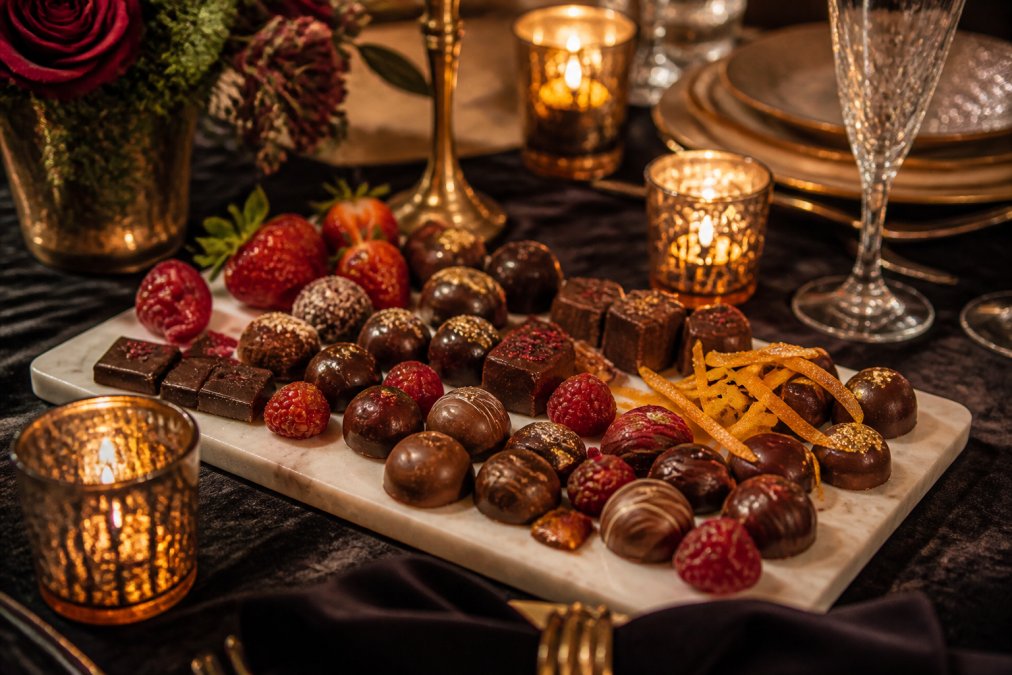
A luxury chocolate dessert board combines artisanal chocolates, confectionery, and complementary elements into a visually stunning centrepiece. Use marble, slate, or a large wooden plank at least 60cm x 40cm.
Assembling artisanal chocolates and ganache creations
Start with five to eight different types of artisanal chocolates: bonbons with visible ganache swirls, hand-dipped truffles in contrasting cocoa powders, and individual chocolate pieces showing craftsmanship. Arrange them in small clusters rather than scattered randomly.
Add ganache creations: small chocolate tarts with glossy ganache tops, chocolate mousse cups, or layered chocolate confections. Layer in complementary elements: fresh raspberries and strawberries (the acidity cuts through richness), candied orange peel, honeycomb pieces, and perhaps a small bowl of fleur de sel for sprinkling.
Styling for impact and visual appeal
Use height variation, propping some items on small stands so the board has dimension. Include fresh flowers (roses, ranunculus) or greenery (eucalyptus, mint leaves) to add colour and fragrance.
Lighting is crucial. Position a candle nearby so the chocolate’s gloss catches the light. Add small cards with descriptions: “Dark Chocolate Ganache Truffle, Madagascar 72%.” For larger groups, create multiple smaller boards rather than one enormous one to prevent crowding.
6. Offer Gourmet Chocolate-Themed Dinner Menu Planning
A gourmet chocolate-themed dinner menu integrates chocolate into courses beyond dessert, creating a cohesive culinary experience. The meal structure flows: aperitif with chocolate-dusted canapés, a savoury course featuring chocolate, a palate cleanser, and a chocolate-focused dessert finale.
Savoury courses featuring chocolate elements
Begin with an amuse-bouche: perhaps a dark chocolate and sea salt caramel on a thin cracker. For the main savoury course, consider beef with a chocolate-enriched sauce. A mole-inspired sauce using dark chocolate, chilli, and spices creates depth and complexity. The chocolate doesn’t announce itself; it simply adds richness and rounds out the flavour profile.
Alternatively, serve duck with a cherry and dark chocolate gastrique, or pork with a chocolate and black garlic reduction. A palate cleanser between courses, perhaps sparkling water with a dark chocolate truffle to dissolve slowly, prepares guests for the sweet finale.
Chocolate mousse and decadent finales
The dessert course showcases chocolate. A chocolate mousse, light, airy, and intensely flavoured, is ideal. Layer dark chocolate mousse with milk chocolate mousse, or serve a single mousse with a contrasting sauce (raspberry coulis with dark chocolate mousse creates striking colour and flavour balance).
Finish with a petit four: a small, exquisite chocolate creation. Pair the dessert course with a dessert wine (tawny Port, Banyuls, or sweet Riesling) or a spirit (Cognac, Armagnac).
7. Plan Dietary-Inclusive Luxury Chocolate Experiences
A luxury chocolate party fails if significant guests cannot participate fully. Dietary inclusivity, vegan, dairy-free, gluten-free, nut-free, isn’t a compromise; it’s a design requirement that expands your audience and demonstrates thoughtfulness.
Premium vegan chocolate now rivals dairy chocolate in quality. Dairy-free ganache made with coconut cream or oat milk is indistinguishable from traditional ganache to most palates.
Vegan and dairy-free artisanal options
High-quality vegan chocolate is made from cocoa solids and cocoa butter, with plant-based milk (usually coconut or oat) replacing dairy. For ganache, substitute cream with full-fat coconut milk or quality oat cream. The ratio is identical, equal parts chocolate and liquid, and the result is silky and indulgent.
Vegan truffles work beautifully. Roll vegan ganache in cocoa powder, toasted coconut, or crushed freeze-dried fruit. For a vegan chocolate mousse, use aquafaba (the liquid from tinned chickpeas) whipped to stiff peaks, folded into melted vegan chocolate with a touch of vanilla.
Nut-free and gluten-free confectionery solutions
Nut allergies are serious, and cross-contamination is a real risk. If serving nut-containing chocolates, prepare all nut-free items in a completely separate space using dedicated equipment. Label everything clearly: “Contains nuts” and “Nut-free.”
Nut-free coating alternatives for truffles include seeds (sunflower, pumpkin), toasted coconut, cocoa nibs, or freeze-dried berries. Most pure chocolate is naturally gluten-free. Source gluten-free biscuits for dipping and ensure fillings are made without gluten-containing thickeners.
Always ask guests about dietary requirements at least two weeks before the event. This gives you time to source specialty ingredients and test recipes.
When you accommodate dietary needs thoughtfully, you communicate that everyone’s experience matters.
Making Your Chocolate Party Memorable and Scalable
Memorability comes from three elements: participation (guests do something, not just consume), discovery (they encounter something unexpected), and connection (they experience it together, creating shared reference points).
A tasting party delivers all three: guests participate in evaluating flavours, discover preferences they didn’t know they had, and discuss their reactions with others. A chocolate-making workshop is inherently participatory. A fondue station creates natural social clusters.
Scaling these experiences requires planning but not complexity. For a group of 40, run two chocolate-making workshops simultaneously, each with 20 people. For a tasting party, prepare two flights per person and stagger the timing. International Chocolate Events has successfully scaled these experiences from intimate private dinners to corporate off-sites with 100+ attendees.
A truly memorable chocolate experience doesn’t require a professional chocolatier on-site, though having one elevates everything. What it requires is intentionality: choosing an experience that matches your guests’ interests, executing it with genuine care, and ensuring everyone can participate fully regardless of dietary needs. International Chocolate Events specialises in designing and delivering exactly these kinds of bespoke experiences, whether you’re hosting 15 people at home or 100+ at a corporate retreat. Make an enquiry to explore how we can create a luxury chocolate party tailored to your specific group, location, and vision.
Frequently Asked Questions
How do you host a sophisticated chocolate tasting party at home?
Start by selecting 4-6 artisanal chocolates with varying cocoa percentages (dark, milk, and white varieties). Arrange them in a tasting flight on a board with tasting notes and palate cleansers like water, crackers, or fruit. Serve at room temperature, guide guests through flavor profiles by cocoa origin, and encourage them to discuss notes they detect. A luxury chocolate tasting party emphasises the sensory experience rather than quantity, making it ideal for adult gatherings seeking a culinary experience.
What are the best chocolate and wine pairing tips for an adult event?
Pair dark chocolate (70%+ cocoa) with full-bodied red wines like Cabernet Sauvignon or Pinot Noir. Milk chocolate works well with lighter reds or dessert wines. White chocolate pairs beautifully with Riesling or Sauvignon Blanc. The key is matching intensity: lighter chocolates with lighter wines, richer chocolates with bolder selections. For spirits, dark chocolate complements whisky or cognac, while milk chocolate suits rum or liqueurs. Serve small portions of each and allow 30 seconds between tastings for the palate to reset.
Can you actually run an interactive chocolate making workshop at home for large groups?
Yes, with proper planning. For groups of 15-40, set up multiple tempering and moulding stations so guests work in smaller clusters simultaneously. Provide pre-melted chocolate bases to reduce setup time, and focus on hands-on activities like truffle rolling, bonbon decorating, or ganache piping rather than full tempering from scratch. For groups larger than 40, consider a demonstration-based format where a master chocolatier leads while guests observe and then participate in a simplified DIY station. Professional guidance ensures the experience feels premium rather than rushed.
How do you accommodate dietary requirements at a luxury chocolate party?
Source high-quality vegan and dairy-free artisanal chocolates for vegan guests, many premium makers now offer these. For nut allergies, clearly label all items and use dedicated utensils to avoid cross-contamination. Gluten-free guests can enjoy pure chocolate, truffles without biscuit bases, and mousse desserts made with gluten-free flour. Plan your menu ahead, ask guests about restrictions when inviting them, and source products accordingly. Many luxury chocolate suppliers now offer inclusive ranges, ensuring all guests enjoy the same indulgent experience.