
Last Updated: November 6, 2026
Quick Summary
Plan a chocolate tasting party for 10 to 20 guests at one long table in a room kept at around 18°C to 20°C. Serve five to seven chocolate types, tasting from lightest to darkest, and allow one to two hours with water and plain crackers between each bar.
- A single host can comfortably guide 20 guests through the tasting.
- Serve five to seven chocolate types, as fewer feels thin and more overwhelms the palate.
- Taste from lightest to darkest, starting with white and finishing with 80%+ dark bars.
- Bring chocolate to room temperature 20-30 minutes before serving so it keeps its snap.
- Print one scorecard per guest covering aroma, snap, texture, flavour and aftertaste.
Table of Contents
- Set the Guest List, Group Size and Room Conditions First
- Choose Chocolate Varieties, Cacao Percentages and Origins
- Build a Chocolate Tasting Party Checklist for Shopping and Setup
- Work Out How Long Should a Chocolate Tasting Party Last
- Set the Tasting Order and Palate Cleansers
- Use a Chocolate Tasting Notes Template and Scorecard
- Pair Chocolate with Wine and Other Drinks
- Chocolate Tasting Party Ideas for Corporate Groups and Private Parties
- Frequently Asked Questions
Set the Guest List, Group Size and Room Conditions First
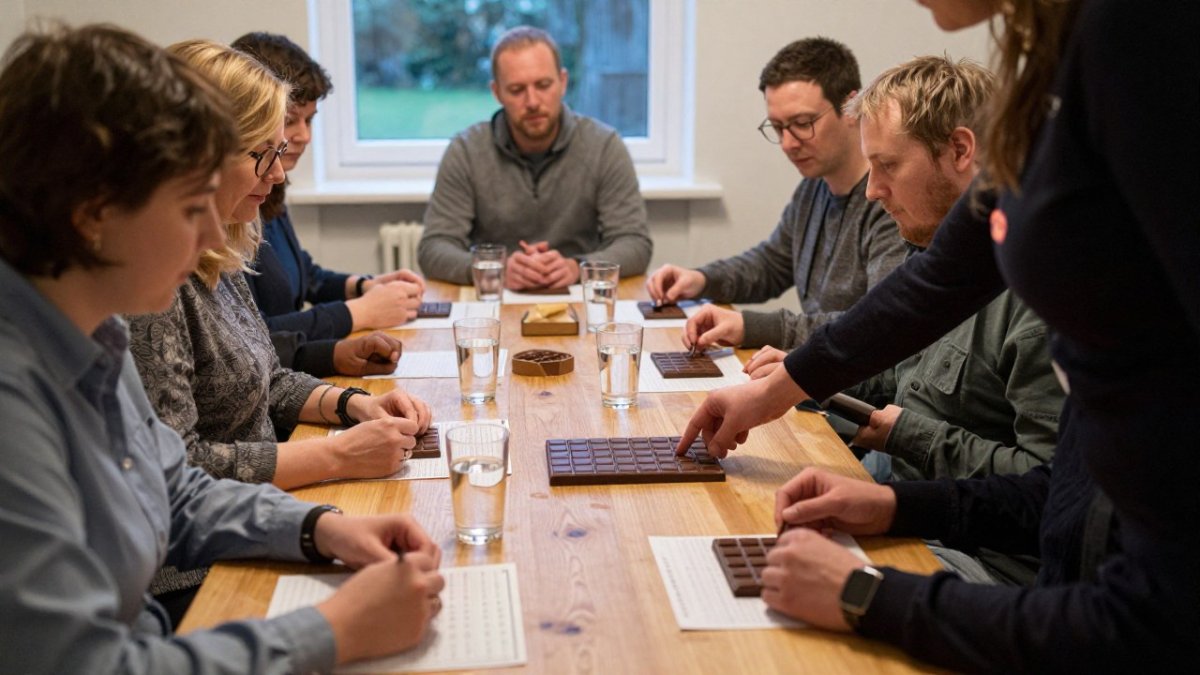
A chocolate tasting party works best with 10 to 20 guests seated at one long table. That number keeps conversation lively without turning the tasting into a crowd. This guide covers how to plan a chocolate tasting party that people still talk about weeks later.
Start with the room. Chocolate shows its best flavours at around 18°C to 20°C. A warm room softens the bars too fast and dulls the snap. Keep the space away from radiators, direct sun and kitchen heat. Good light helps too, so guests can see the shine and colour of each piece.
Group size shapes everything else:
- 8 to 12 guests: intimate, easy to host at home
- 15 to 20 guests: the sweet spot for a proper party
- 25 or more: split into tables of 8 to 10, each with its own host
How many people can a chocolate tasting party handle?
A single host can guide 20 guests comfortably. Beyond that, you need a second pair of hands to serve, refill water and keep the pace steady.
Choose Chocolate Varieties, Cacao Percentages and Origins
Variety is the whole point. A good table mixes dark, milk and white chocolate, spans a few cacao percentages, and travels across at least three origins. That range gives guests something real to compare.
Here is a simple structure that works:
- Two dark bars: one around 60-70% cacao, one at 80% or above
- One milk chocolate: look for 35-45% cacao
- One white chocolate: for contrast and sweetness
- One single-origin bar: named by country, such as Ecuador or Madagascar
Cacao percentage tells you how much cocoa solids and butter are in the bar. Higher numbers mean less sugar and more bitterness. Origin shapes the flavour notes: some taste fruity, others nutty or floral.
How many types of chocolate should you serve?
Serve five to seven types. Fewer feels thin, and more overwhelms the palate. Five is plenty for a two-hour party, and seven suits a longer, slower evening.
Build a Chocolate Tasting Party Checklist for Shopping and Setup
A chocolate tasting party checklist keeps the planning calm. Build it in two parts: what to buy and what to set out. The numbers below assume 15 guests and a two-hour tasting, and they scale linearly.
Shopping list for 15 guests:
- 5-7 bars, roughly 30-40g per guest in total (so 450-600g of chocolate across all bars)
- Still water: about 1 litre per guest, plus a jug for refills
- Plain crackers or neutral biscuits: one small bowl per table
- Green apples: two, sliced thin
- Plain bread: one loaf, cut into small cubes
- Small plates or boards: one per guest
- Napkins and tasting forks or picks: two per guest
- Printed scorecards and pens: one per guest, plus two spares
- Small labels and a marker for naming each bar
Setup checklist:
- Cut chocolate into small, even pieces, roughly 5g each, so guests get two or three pieces per bar
- Label each plate with the bar name, cacao percentage and origin
- Set water glasses at every place
- Lay out scorecards and pens
- Keep spare bars in a cool spot, away from heat
- Note allergens on each label (see below)
Budget tiers. Costs vary with the bars you choose, the number of guests and the chosen date. Pricing depends on quantity, dates and delivery, so check current prices with International Chocolate Events before you commit.
Storage and serving temperature. Chocolate shows its best flavours at around 18°C to 20°C. Store bars in a cool, dry cupboard away from radiators and direct sun, and bring them out 20-30 minutes before serving so they soften slightly without losing their snap. Watch out: chocolate stored in the fridge will bloom (a white haze on the surface) and taste dull, keep it out of the cold.
Dietary needs and allergens. Check labels for milk, soya, nuts and gluten, and write the allergens on each plate label so guests can help themselves safely. Offer a couple of vegan dark bars (many 70%+ bars are dairy-free) and a nut-free option, and keep a separate serving board for anything containing nuts. A simple card listing ingredients per bar saves repeated questions and makes the table inclusive.
Low-waste setup. Use reusable plates and glasses rather than disposable ones, and cut only what you need, leftover chocolate keeps well in an airtight container for a week. Keep packaging aside for recycling, and send guests home with any spare squares in small paper bags rather than binning them.
Work Out How Long Should a Chocolate Tasting Party Last
A chocolate tasting party should last between one and two hours. That window gives guests time to taste properly and talk.
Plan the timing like this:
- First 15 minutes: welcome drinks and settling in
- Next 45 to 60 minutes: guided tasting, one chocolate at a time
- Final 20 minutes: favourites, questions and a relaxed finish
Mid-afternoon and mid-evening both work well. Avoid straight after a heavy meal, when palates are tired. If you are running a mobile workshop, our guide to the logistics of mobile chocolate making workshops explains how setup and travel affect timing.
Set the Tasting Order and Palate Cleansers
Always taste from lightest to darkest. Start with white chocolate, move through milk, then finish with the highest cacao dark bars. This order trains the palate gently instead of shocking it. Within each type, go from lower to higher cacao percentage.
A practical sequence for five bars looks like this:
- White chocolate (around 30% cacao)
- Milk chocolate (35-45% cacao)
- Dark chocolate (60-70% cacao)
- Single-origin dark (70% cacao, named by country)
- High-cacao dark (80%+ cacao)
Why the order matters. Each step raises the bitterness and intensity slightly, so the palate adjusts rather than being overwhelmed. Jumping straight to an 85% bar makes everything after it taste flat.
Palate cleansers. Between each chocolate, guests should sip still water and nibble a plain cracker or a slice of green apple. These neutral foods clear the mouth without coating it. Warm water works better than cold, cold water numbs the tongue and mutes flavour.
Serving temperature. Bring the chocolate to room temperature (around 18°C to 20°C) before the tasting. Cold chocolate tastes muted and waxy; warm chocolate loses its snap and turns soft. If the room is warm, keep spare bars in a cool box and set out only what you need for each round.
Inclusive alternatives. For guests who avoid dairy, choose vegan dark bars and check labels for milk traces. For those avoiding alcohol, offer black coffee, cold brew or loose-leaf tea alongside the water, these stand up to dark chocolate better than soft drinks. Keep a nut-free board separate and label it clearly.
All are British.
A common mistake is serving strongly flavoured snacks between tastings. Save those for after the final bar. If you love this side of the experience, our chocolate making experience lets you craft your own pieces with expert guidance.
Use a Chocolate Tasting Notes Template and Scorecard
A chocolate tasting notes template turns a fun evening into something guests remember. It also gives quiet guests a focus and sparks conversation.
Ask guests to score each bar on five points:
| Criteria | What to Look For | Score (1-5) |
|---|---|---|
| Aroma | Smell before tasting | 1-5 |
| Snap | Clean break when bitten | 1-5 |
| Texture | Smoothness and mouthfeel | 1-5 |
| Flavour | Notes you can name | 1-5 |
| Aftertaste | How long it lingers | 1-5 |
Print one card per guest with space for notes beside each bar. Encourage simple words: “fruity,” “smoky,” “creamy.” The scoring keeps everyone involved and gives the group a shared result at the end.
Pair Chocolate with Wine and Other Drinks
Pairing chocolate with wine is where the evening gets interesting. The rule is simple: match sweetness with sweetness and weight with weight.
Try these combinations:
- Milk chocolate with a light red or a smooth dessert wine
- 70% dark chocolate with a full-bodied red
- White chocolate with a fruity white or sparkling wine
- High-cacao dark with a strong coffee or aged spirit
For non-drinkers, offer black coffee, cold brew or a good loose-leaf tea. These stand up to dark chocolate better than soft drinks. Pour small measures, since the aim is tasting, not drinking.
Chocolate Tasting Party Ideas for Corporate Groups and Private Parties
A chocolate tasting party ideas list should stretch beyond the home table. Corporate groups and private parties can both build a memorable event around chocolate, with a few smart tweaks.
For corporate teams, a guided tasting can work as an icebreaker before a longer workshop. For private celebrations, a themed tasting with paired drinks can make a birthday or anniversary feel special.
At International Chocolate Events, we run hands-on sessions for groups from 10 to 100+, anywhere you need us. Our chocolate team building events suit corporate away days and social occasions alike. The Truffle Express is one of our social party experiences. For a bespoke quote, make an enquiry to talk through your date and group size.
Frequently Asked Questions
How much chocolate do you need per person for a tasting?
Allow 10 to 15 small pieces per guest, roughly 5 to 8 grams each, so a total of 50 to 120 grams of chocolate per person. For a group of 40, that means buying around 2 to 4.8 kilograms across six to eight bars. Buy bars of 70 to 100 grams and cut them into squares no larger than a thumbnail. If you are running a corporate event with 100 guests, order in bulk from a wholesaler and portion into small paper bags or boards the morning of the event.
How do you organise a chocolate tasting party for a large group?
Start with a guest list and confirm numbers two weeks ahead. Choose five to seven chocolates with a mix of dark, milk and white, and note cacao percentages and origins. Prepare small tasting portions in advance, set the order from mild to intense, and print a chocolate tasting notes template for each guest. For groups over 30, split into tables of eight to ten with a host or facilitator at each. A guided tasting keeps the pace steady and stops the event drifting into a free-for-all.
What should guests look for when tasting chocolate?
Guests should assess five things: aroma before biting, the snap when broken, texture and mouthfeel as it melts, flavour notes from start to finish, and the aftertaste. Encourage them to let each piece melt on the tongue rather than chew. Provide water and plain crackers between samples. A chocolate tasting notes template with these five categories makes the evaluation simple and gives quieter guests a structured way to join the conversation.
How long should a chocolate tasting party last?
Plan for 90 minutes to two hours for a seated tasting of six to eight chocolates. A 60-minute format works for lunchtime corporate sessions with four to five samples. Add 30 minutes if you include a chocolate-making demonstration or team challenge. Avoid scheduling mid-afternoon when energy dips; mid-morning or early evening suits most groups. Build in 10 minutes at the end for questions and informal chat.
Planning a tasting is the easy part. Making it stick as a team experience takes a host who knows chocolate inside out. International Chocolate Events brings a master chocolatier with over a decade of experience to your venue, with scalable workshops for 10 to 100+ guests and menus tailored to allergies and dietary needs. Get started with International Chocolate Events and give your group an evening they will still be describing next month.
